
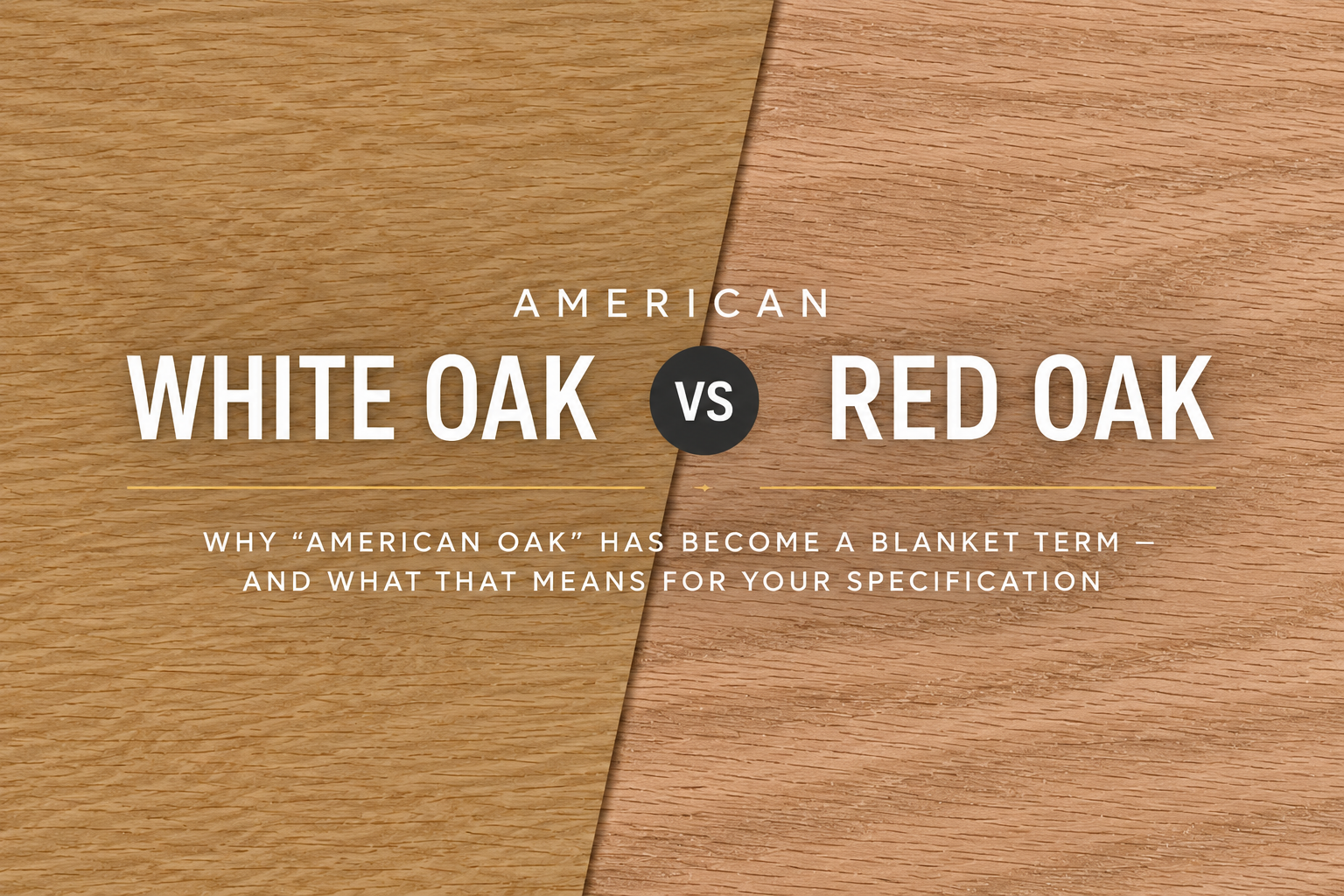
American White Oak vs Red Oak: Why the Species Matters
Timber Specification ● Material Selection
September 1, 2026
“American Oak” might sound specific, but it can describe two distinctly different timbers. This article looks beyond the label to unpack the visual and material differences between American White Oak and American Red Oak, where each species works best, and how colour, grain and finish can influence the final result. Most importantly, it explains why naming the species — not simply the origin — matters when the design intent needs to carry all the way from specification to installation.
PROJECTS LOOKBOOK ⇩
Over the last few years, American White Oak has seen a significant and sustained increase in price. Driven by strong global demand, particularly from the European and North American interior markets, the premium on White Oak has widened to the point where suppliers and manufacturers have begun introducing American Red Oak as an alternative.
On paper, the substitution can appear minor: both are North American hardwoods, both carry the broad descriptor "American Oak", and, on a quote or specification schedule, that term is often used interchangeably for either species.
That ambiguity is where the problem starts. If you specify "American Oak" without nominating the species, you are exposed. A supplier under margin pressure may substitute Red Oak for White Oak — not necessarily through bad faith, but because the industry's loose use of the term permits it. The result is a material that may appear visually different from what was intended.
What follows is for those who want to move beyond the label and develop a genuine understanding of each species on its own terms.

American White Oak
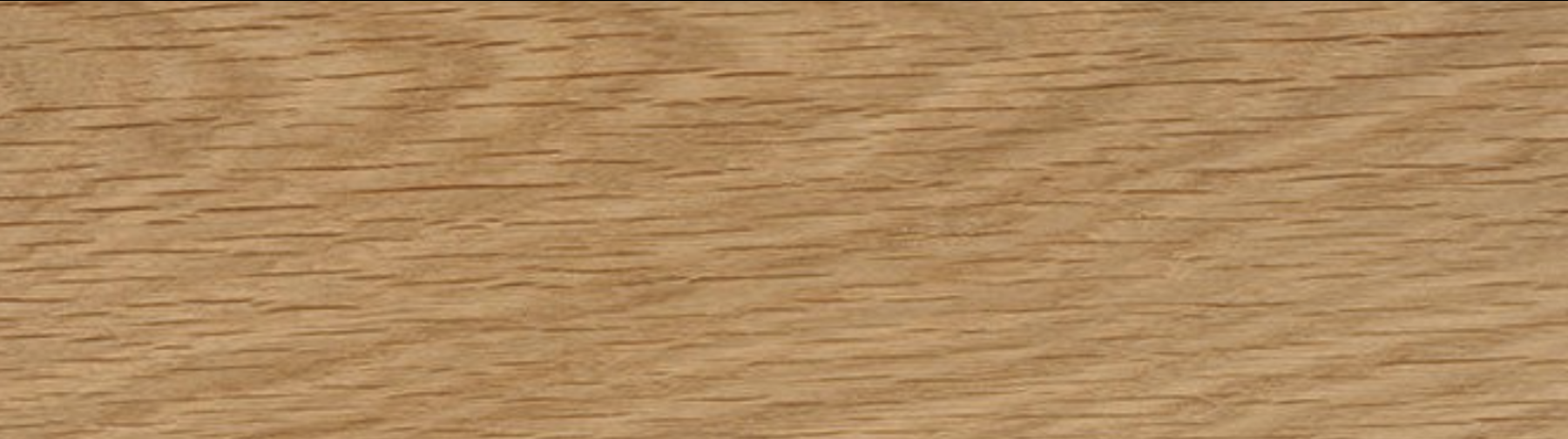
American White Oak is a commercial grouping of North American white oak species, including Quercus alba. It is the timber most designers are reaching for when they want a refined, contemporary aesthetic. Its base colour sits in the pale golden-yellow to biscuit range — a restrained quality that works with both neutral palettes and richer material combinations.
The defining characteristic of White Oak is its medullary ray figure. Quarter-sawn or rift-sawn cuts reveal pronounced silver-gold ray fleck — those distinctive luminous streaks that catch the light at an angle and give the surface genuine visual depth. Even in flat-sawn boards, the ray fleck is present, lending texture without visual noise.
White Oak is ring-porous, but its vessels can contain tyloses — cellular structures that block the open pores. This contributes to White Oak's characteristic tighter-pored appearance and, in an interior context, the difference in pore structure can affect how the timber accepts and responds to a finish.
American Red Oak
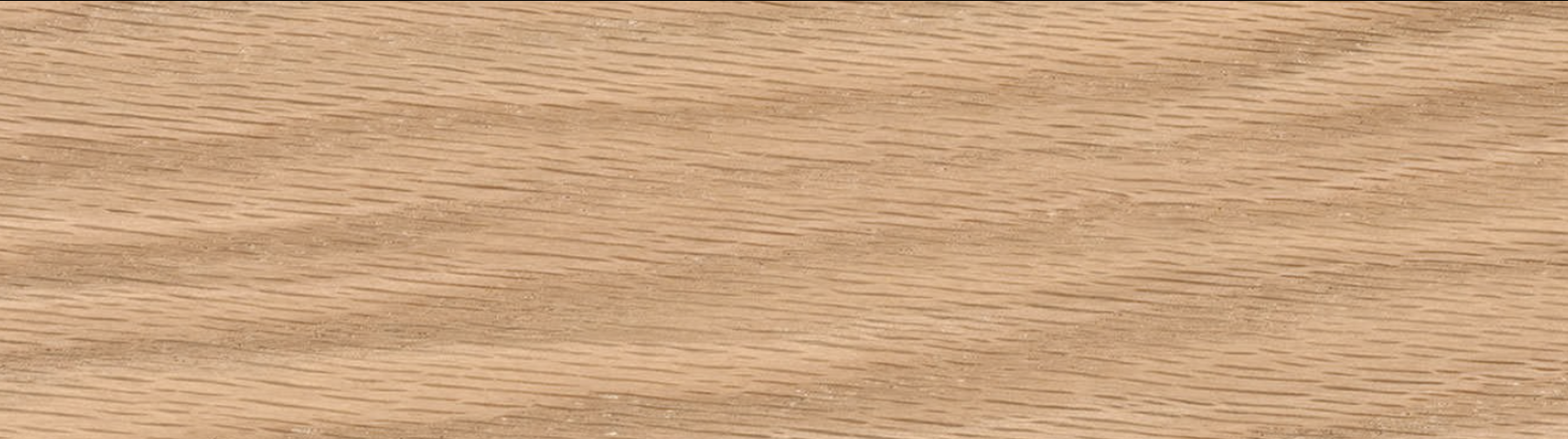
American Red Oak (Quercus rubra) is the most widely harvested hardwood in North America, and its ubiquity has, at times, worked against its reputation. It is a genuinely beautiful timber, and to the untrained eye, the two species can appear remarkably similar — which is precisely why understanding the subtler distinctions matters.
Red Oak's base colour carries a distinctly warm, pinkish-amber undertone. The grain is coarser and more open than White Oak, and while ray fleck is present, it is far less pronounced — the surface reads as more straightforwardly "grained" rather than figured. In traditional or transitional interiors, this warmth can be an asset. In a cool-toned or minimalist scheme, the pink cast can be more difficult to manage.
Red Oak's open pore structure, without the tyloses characteristic of White Oak, gives the surface a more tactile, textured quality — one that lends the timber a rawer, more organic character that suits certain interior aesthetics well.
American White Oak vs Red Oak: The Comparison
At-a-glance comparison of key visual and finish characteristics:
Where Each Species Fits
From the variety of projects we have supplied across varying briefs, below outlines the most common applications for each.
What is the difference between American White Oak and Red Oak?
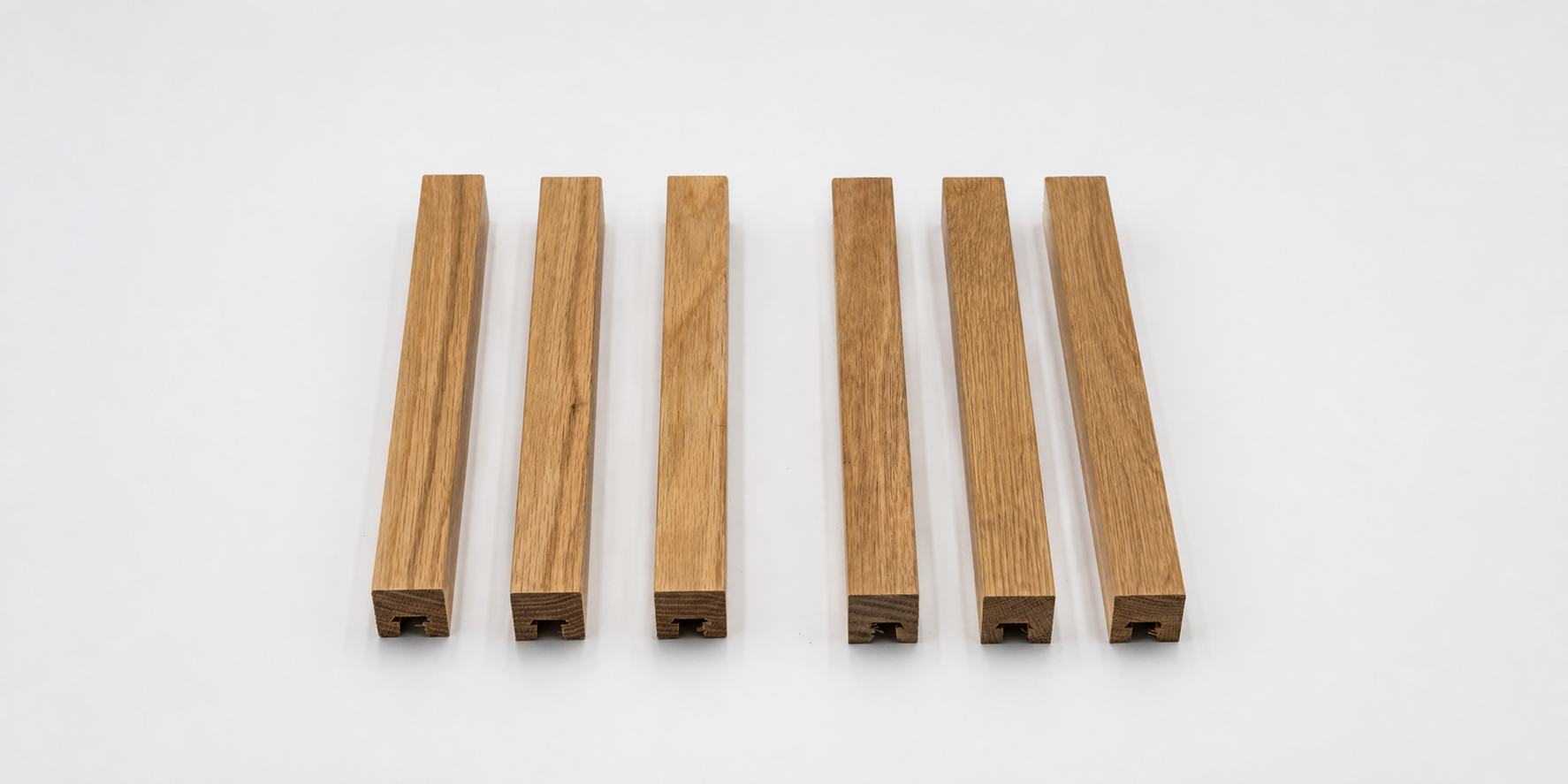
American White Oak generally has a pale golden-biscuit tone, tighter pore structure and more pronounced medullary ray figure. American Red Oak typically has a warmer pinkish-amber undertone, a more open grain and less pronounced ray fleck. Both are high-quality North American hardwoods, but they can produce noticeably different visual results in architectural applications.
The MBS Perspective
It is worth being clear on this point: neither American White Oak nor American Red Oak is an inferior material. Both are legitimate, high-quality hardwoods, and the conversation is not about one being better than the other — it is about understanding where each aesthetic best suits or matches the design intent.
The issue arises not from the species themselves, but from the assumption that they are interchangeable — that "American Oak" describes a single, uniform material. It does not. The visual outcome of a White Oak batten wall or ceiling in a natural finish and a Red Oak batten wall or ceiling finished the same way are meaningfully different: different in colour, different in how the grain reads, and different in how they will sit within the broader palette of the space. A client who expected one and received the other will notice.
Let this serve as an awareness raiser. Being specific about species in your specification is the simplest way to ensure what is delivered is exactly what was intended — no surprises on site, no difficult conversations after installation.
If you are working through the decision, we are happy to prepare sample boards of both species in your nominated finish. Seeing the actual colour, grain and profile in hand before anything is committed is the most reliable way to align expectations across the project team and arrive at installation with confidence.

Our architectural team is here to collaborate on ideas, materiality and budget from day one. Drop us a note at hello@mbsarchitectural.com.au or call 03 9580 7800 to start the conversation.
Every material.one source.
Let's bring your project to life.





.svg)