
Spaces That Need to Sound Better: Why Apollo Wood Wool Belongs in Schools and Aquatic Centres
Aquatic Environments ● Education Acoustics
April 15, 2026
From reverberant classrooms to echo-heavy indoor pools, some environments place enormous acoustic pressure on architecture. This article explores why Apollo Wood Wool ceiling and wall systems are increasingly being specified across education and aquatic projects, looking at how the material improves speech intelligibility, reduces reverberation, performs in humid conditions and introduces warmth into large institutional spaces — all while meeting the durability demands of high-occupancy environments.
PROJECTS LOOKBOOK ⇩Some buildings can tolerate poor acoustics. Schools and aquatic centres cannot.
In these environments, sound shapes behaviour almost immediately. A classroom with uncontrolled reverberation becomes tiring before the first lesson is over. An indoor pool with hard reflective surfaces becomes overwhelming within minutes.
Voices compete with echoes. Instructions disappear into ambient noise. Occupants unconsciously raise their volume to compensate, and the building slowly begins working against the people inside it.
This is where material selection stops being decorative and becomes environmental.
Apollo Wood Wool ceiling and wall systems are increasingly appearing across education and aquatic projects not simply because they absorb sound well, but because they solve several architectural problems simultaneously.
Acoustics, durability, visual warmth, impact resistance and long-term performance all intersect in these environments. Few materials navigate all of them as elegantly.
And importantly, they do it without making the architecture feel overtly “acoustic”.

The Problem With Large Educational Spaces
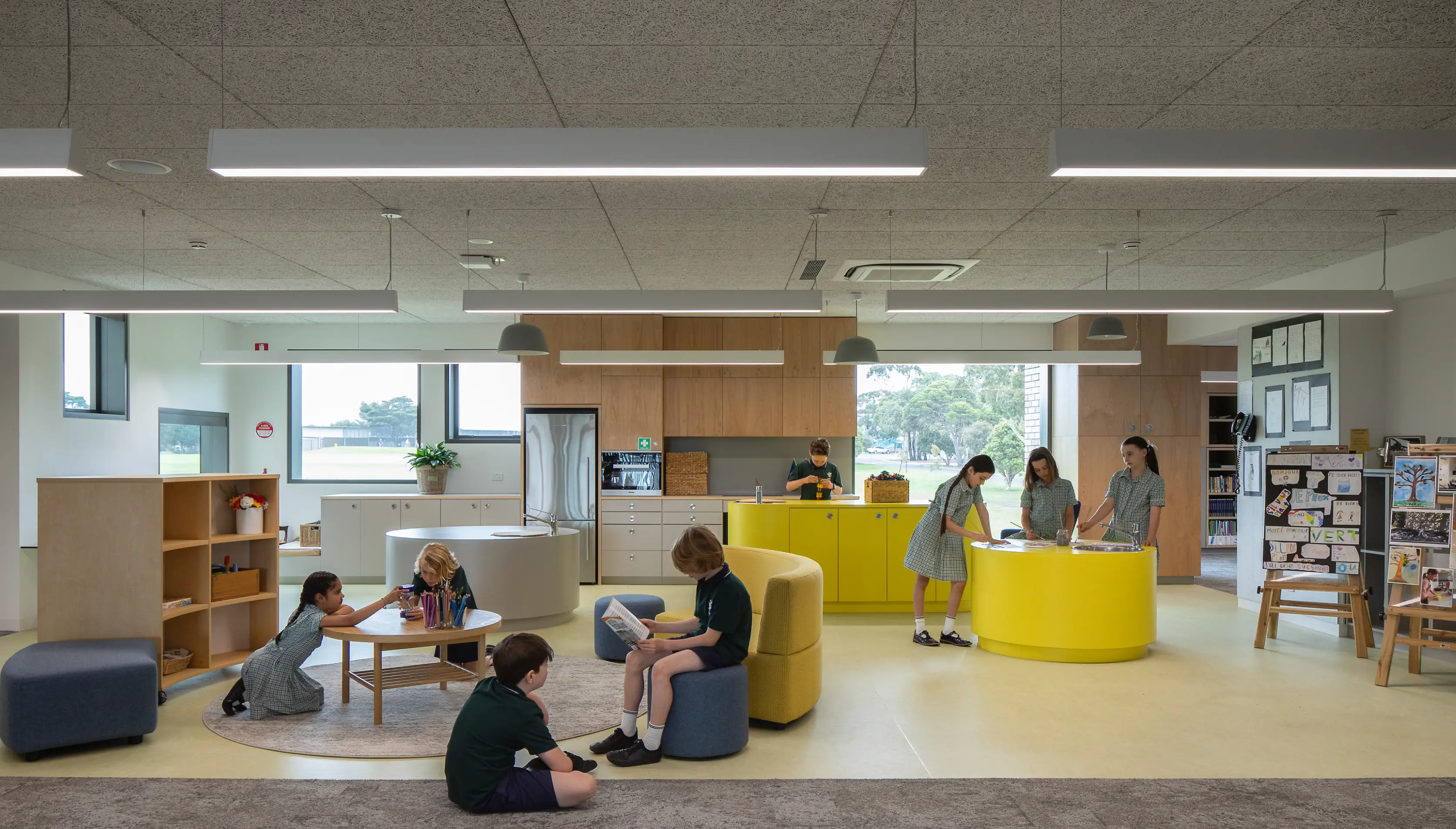
Contemporary education design has changed dramatically over the last decade.
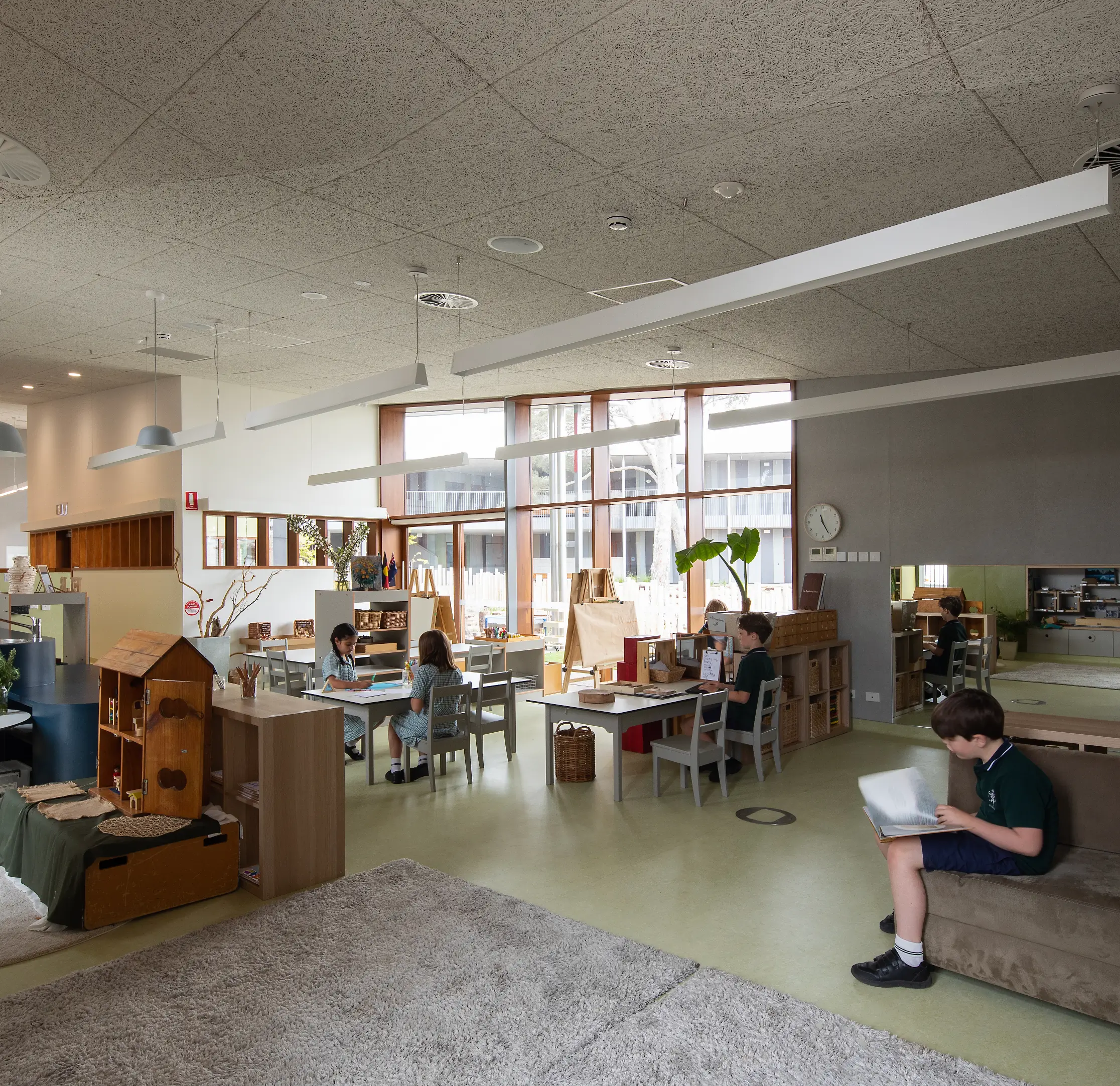
Open learning environments, collaborative teaching models, exposed structure and flexible planning have created spaces that feel lighter, more connected and more dynamic. They’ve also introduced significant acoustic complexity.
Hard surfaces multiply. Volumes increase. Ceiling heights rise. Sound travels further.
Without sufficient absorption, speech begins competing with itself. Reverberation builds. Classrooms become cognitively fatiguing. Teachers project harder. Students lose clarity, particularly younger learners or those already struggling with concentration, hearing or language processing.
The issue is rarely dramatic enough to immediately identify. It simply accumulates throughout the day.
That’s what makes acoustic design in education so important. Good learning environments are not just visually calm. They are acoustically calm too.
Apollo Wood Wool performs exceptionally well in these spaces because of the material’s open fibrous structure, which absorbs sound energy rather than reflecting it back into the room. Reverberation reduces. Speech clarity improves. The room becomes easier to occupy.
The effect is perceptible almost immediately.
Speech Intelligibility Is an Architectural Outcome
Architects often talk about light, circulation and materiality shaping behaviour within a space. Acoustics deserve to sit within that same conversation.
Because in educational environments, speech intelligibility is fundamental to how the building functions.
A teacher should not need to compete with the room itself to be understood.
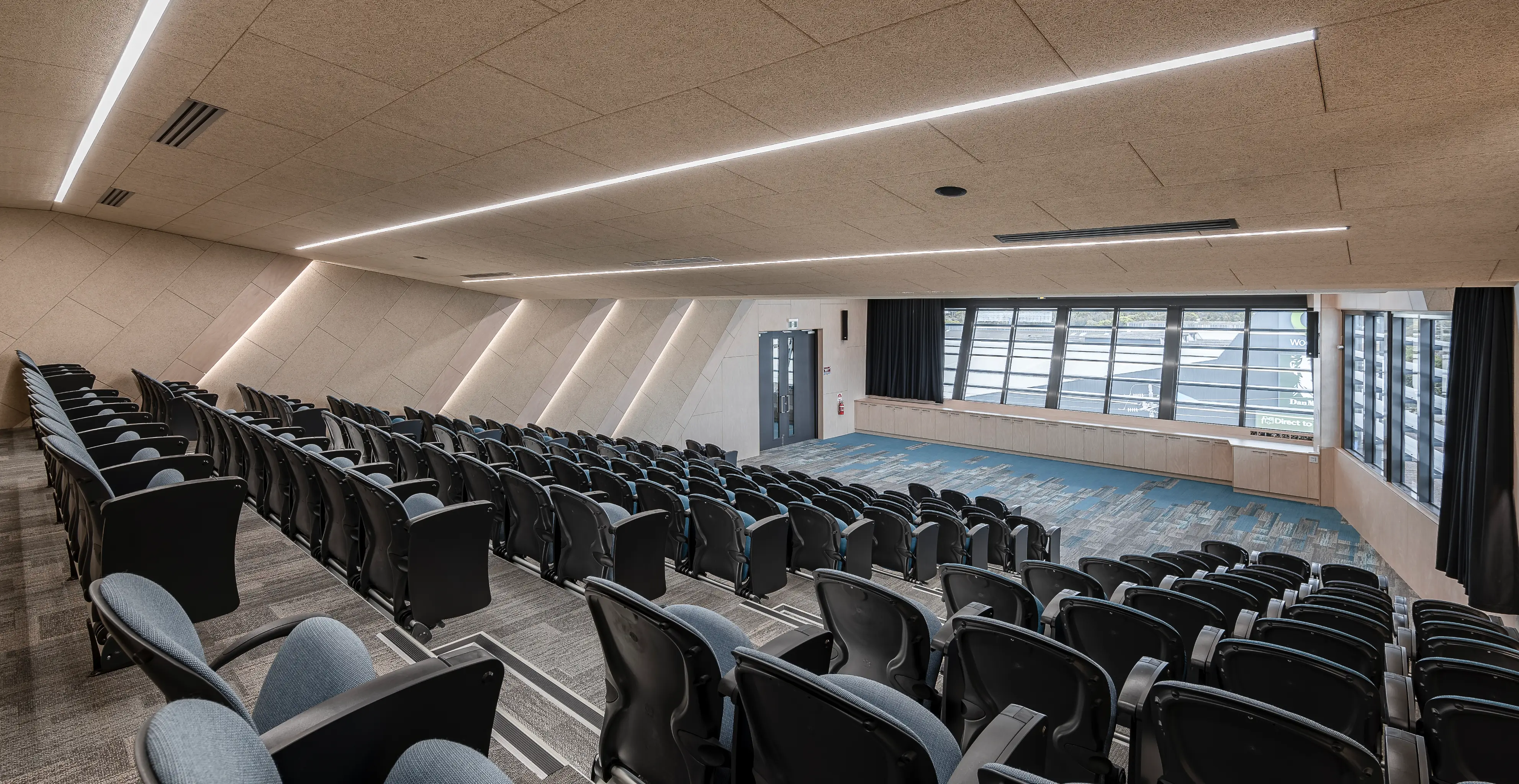
Wood Wool contributes to clearer verbal communication by controlling reflected sound and reducing background reverberation. In practical terms, this creates classrooms, libraries and learning commons that feel more focused and less chaotic.
This becomes particularly valuable in:
⦿ Open-plan learning environments
⦿ University lecture spaces
⦿ School halls
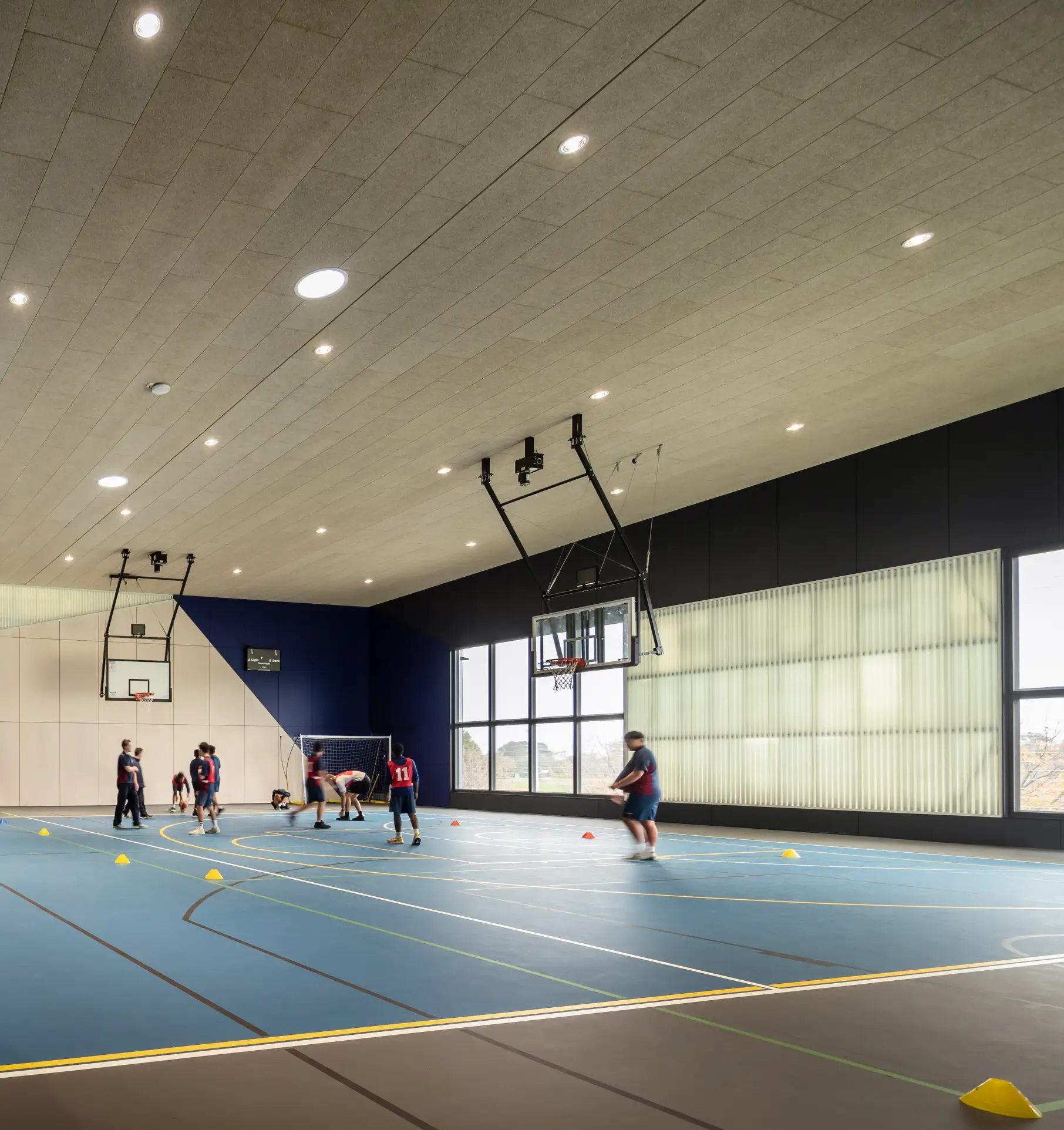
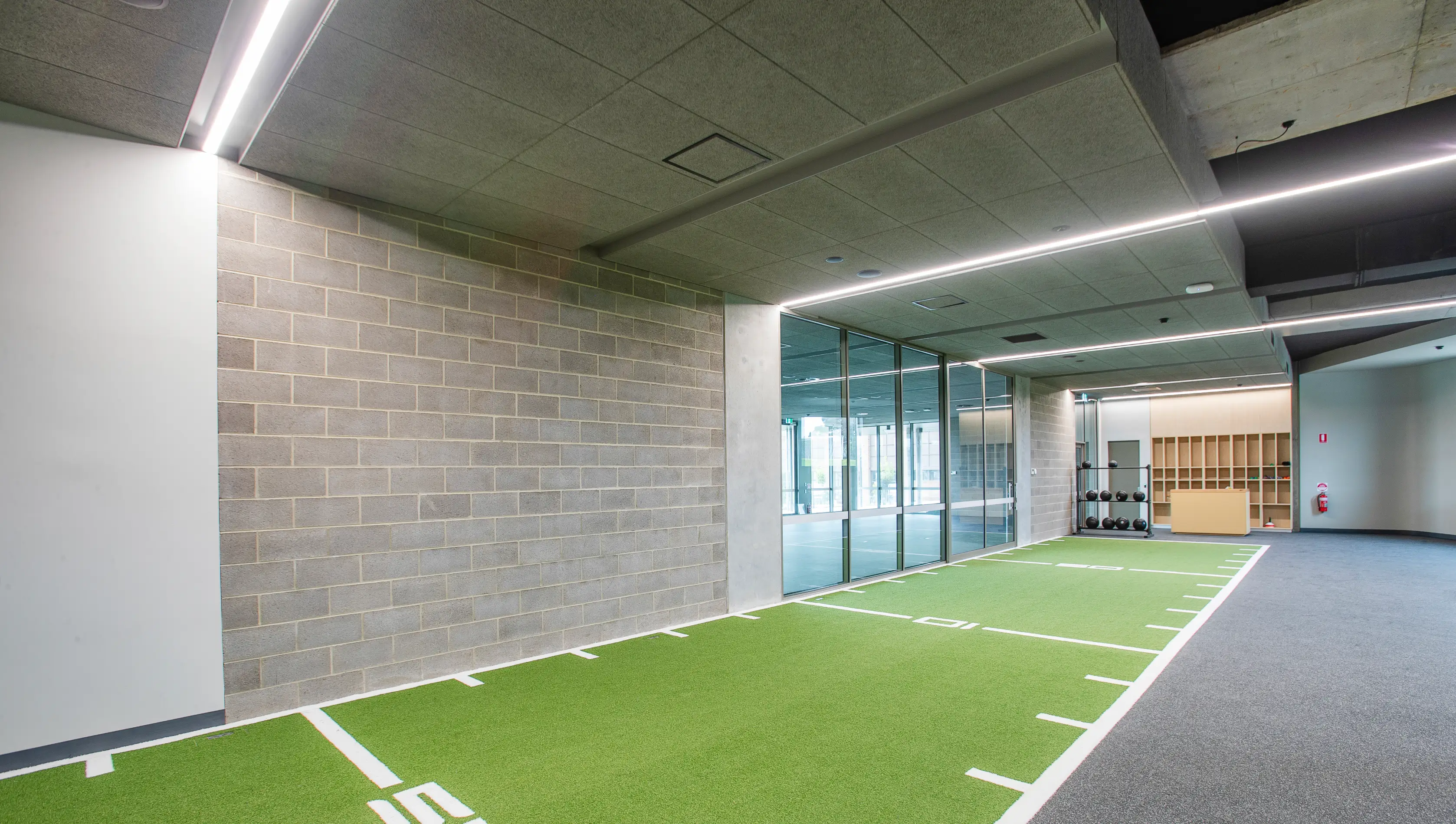
⦿ Indoor sports facilities
⦿ Libraries and study areas
⦿ Circulation zones with high occupancy
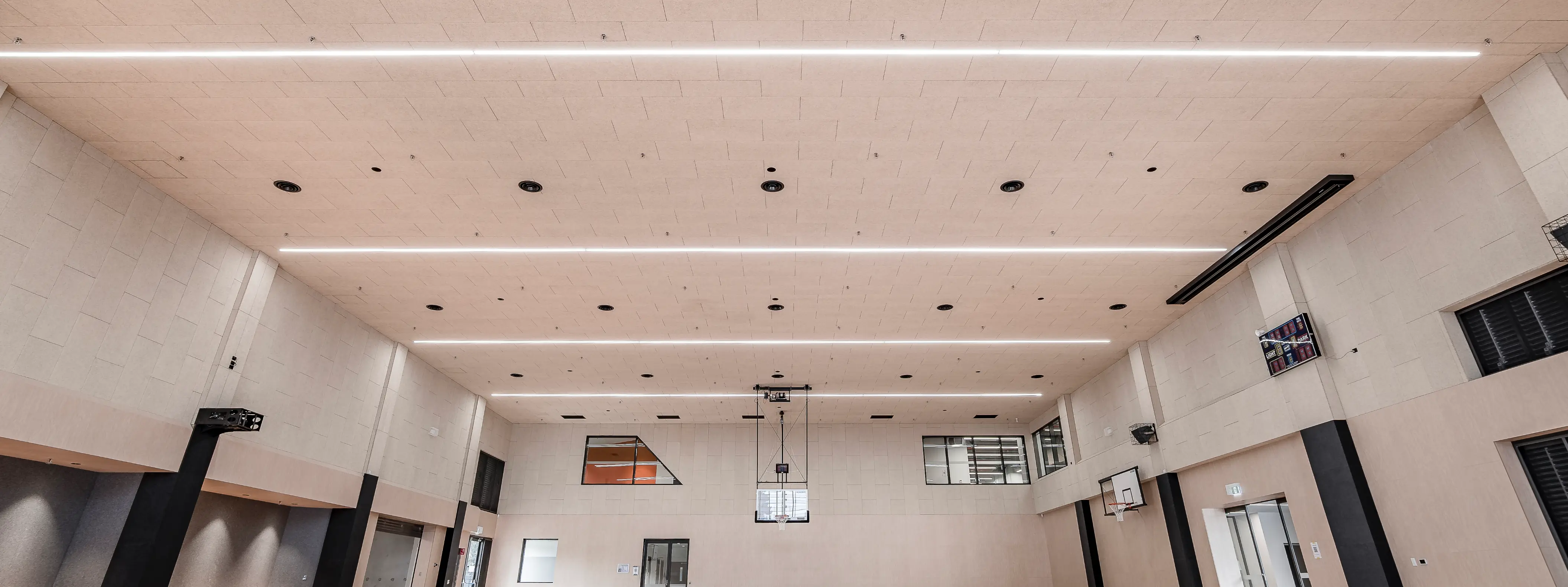
Importantly, the acoustic improvement is achieved without visually softening the architecture into something overly corporate or institutional. Apollo Wood Wool retains texture, depth and natural variation, giving designers an acoustic material that still feels architectural.
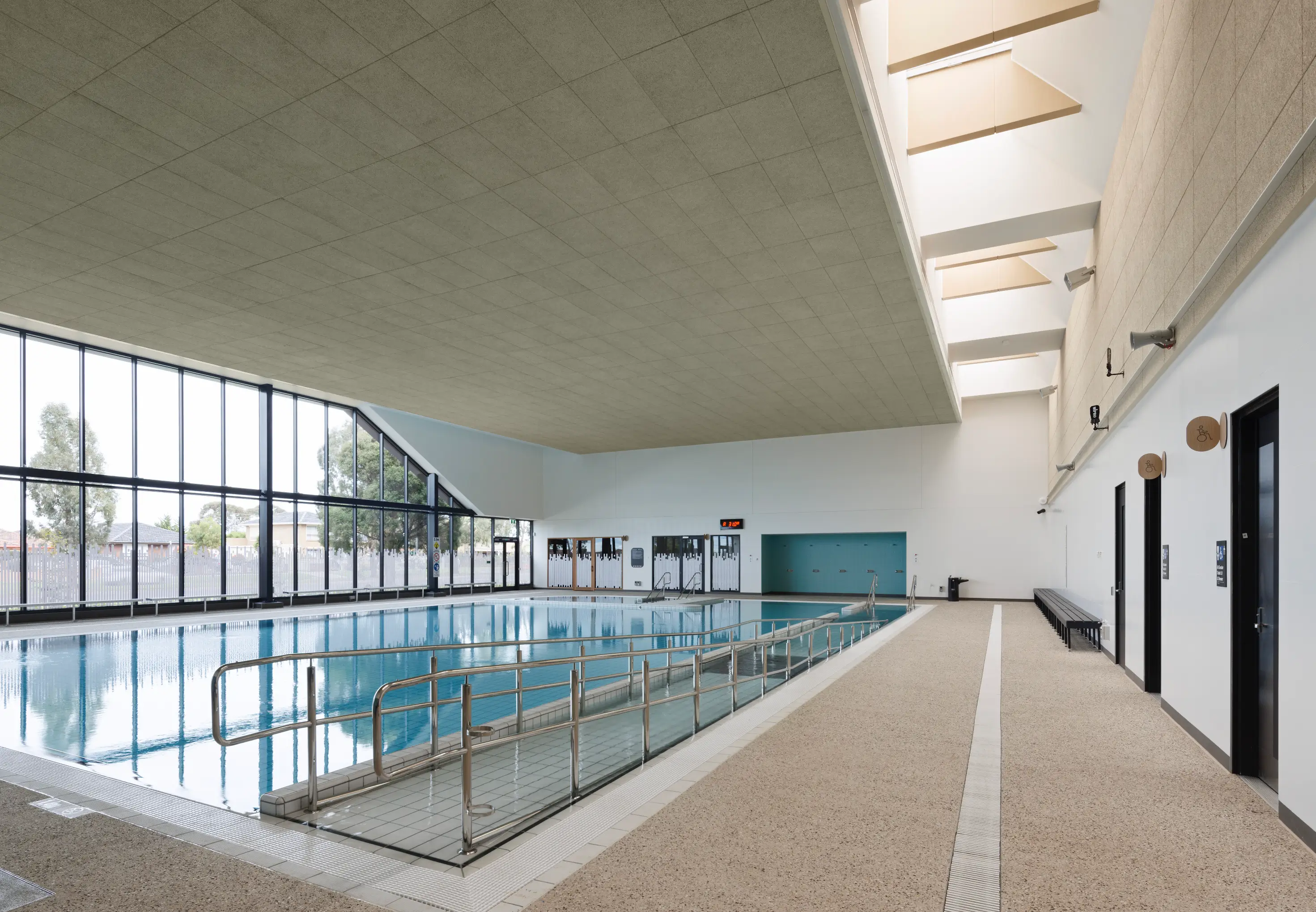
Aquatic Centres Are Among the Hardest Acoustic Environments to Design
Indoor pools are acoustically brutal.
Concrete. Tiles. Glass. Water. Large volumes. Constant activity.
Almost every surface within an aquatic hall is reflective. Sound ricochets continuously around the space, often creating environments that feel stressful before you can even articulate why.
Communication becomes difficult. Lifeguard instructions become harder to distinguish. Occupant comfort deteriorates quickly.
This is precisely where Apollo Wood Wool excels.
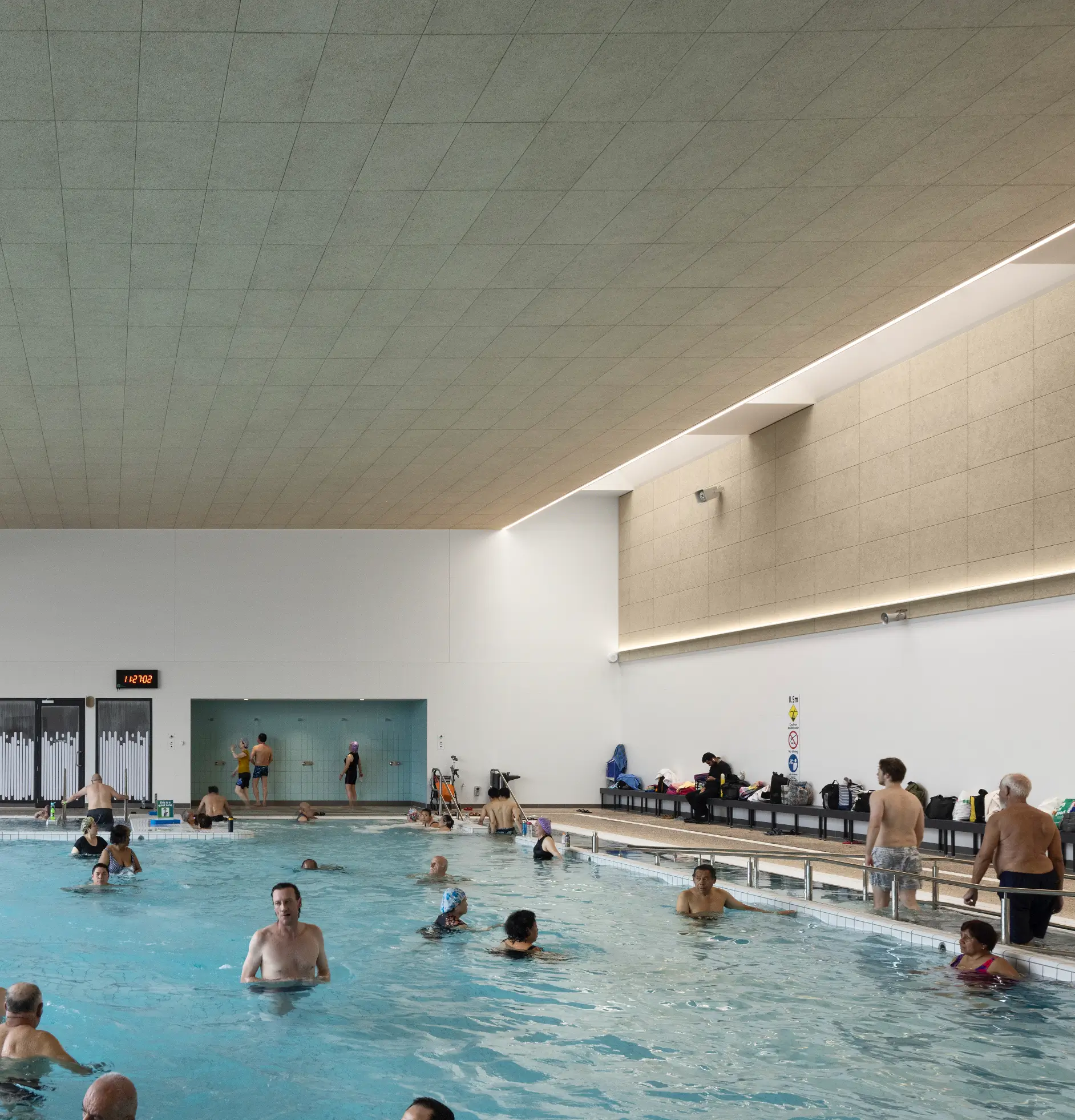
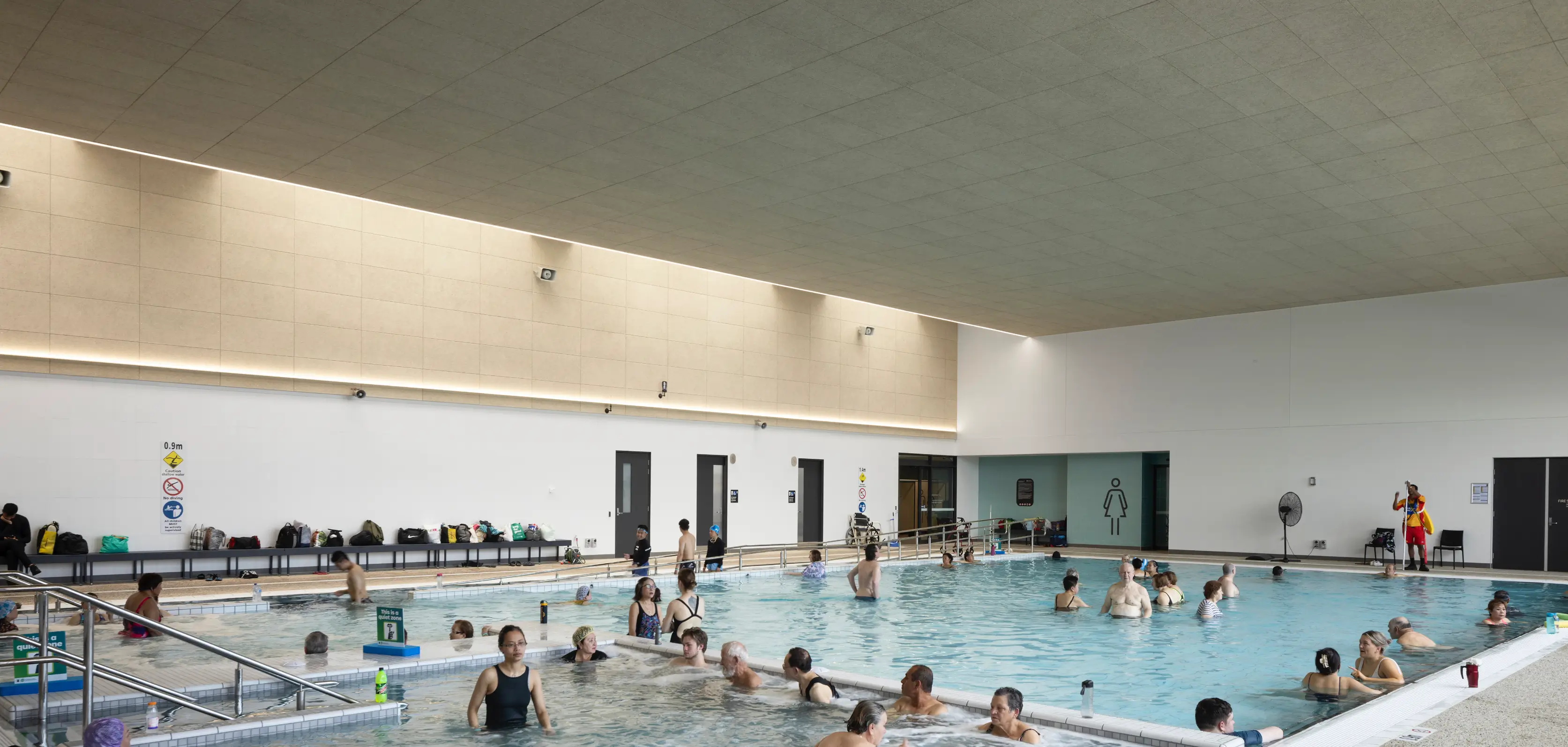
The material’s high acoustic absorption helps soften reverberation within these cavernous environments, reducing the harshness typically associated with indoor pool halls. Spaces feel calmer, clearer and more controlled without compromising durability.
Because durability matters enormously in aquatic projects.
Moisture Resistance Matters Just as Much as Acoustics
Swimming pools are unforgiving environments for building materials.
Humidity levels remain consistently high. Chlorinated air accelerates material degradation. Temperature fluctuations place stress on ceiling systems over time.
Materials that perform adequately in standard commercial environments often fail prematurely in aquatic applications.
Apollo Wood Wool is particularly well suited because it combines acoustic performance with dimensional stability and long-term resilience in humid conditions when correctly specified. That combination is rare.
It means the ceiling can continue performing acoustically while also withstanding the environmental pressures unique to aquatic architecture.
This is one of the reasons Wood Wool is increasingly being specified across:
⦿ Indoor swimming pools
⦿ Aquatic and leisure centres
⦿ Wellness spaces
⦿ Hydrotherapy environments
⦿ School aquatic facilities
The material doesn’t just survive these environments. It improves how they feel to occupy.
Warmth Matters in Institutional Architecture
One of the more overlooked qualities of Wood Wool is the atmosphere it creates.
Education and civic buildings often contain large expanses of hard surfaces and utilitarian materials. Acoustically absorbent products can sometimes worsen this, introducing flat, overly commercial finishes that feel disconnected from the architecture.
Apollo Wood Wool does the opposite.
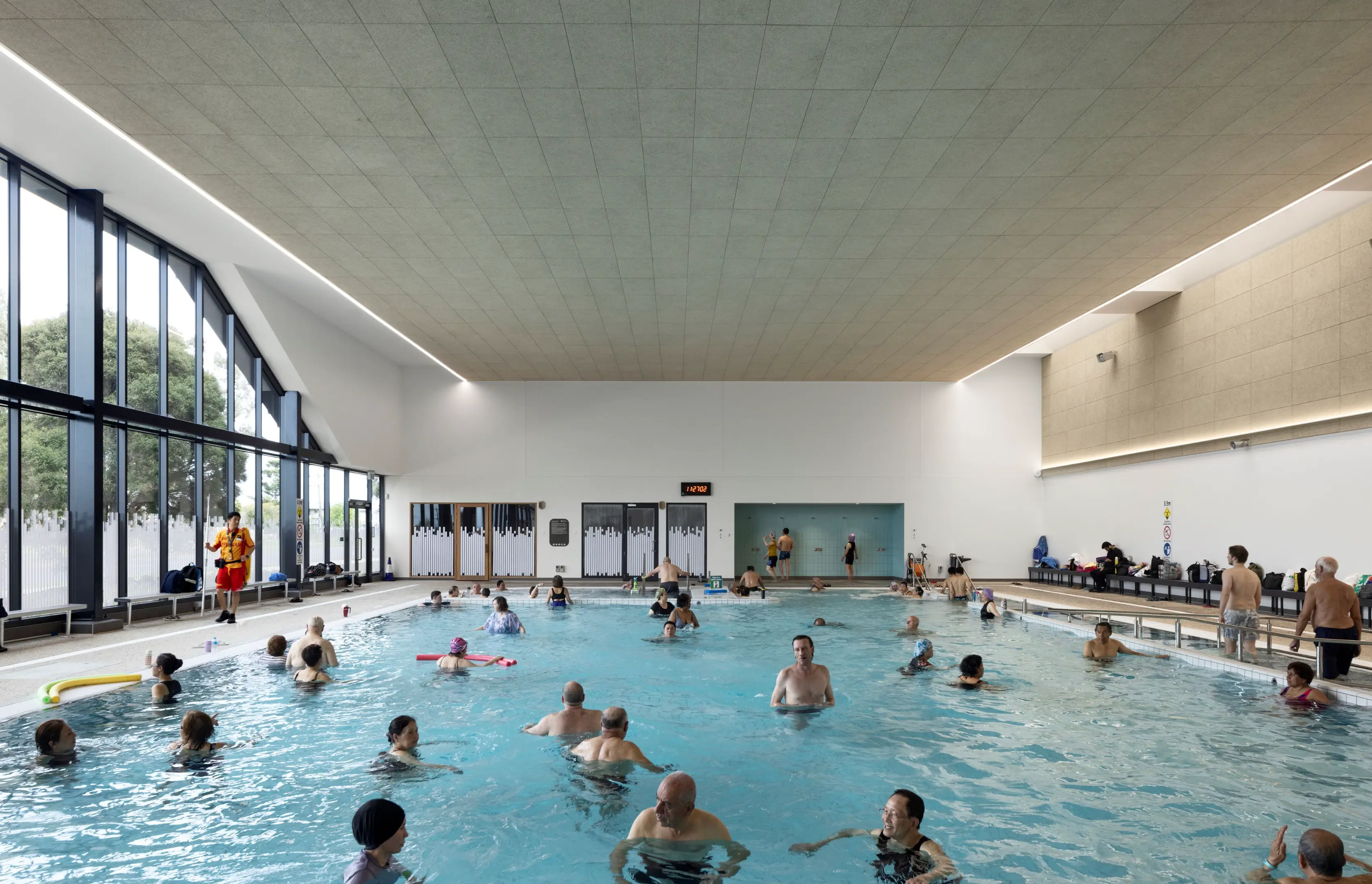
Its textured surface introduces softness, rhythm and visual warmth into large-volume spaces without compromising the clarity of the design language. The material feels tactile and architectural rather than purely technical.
This becomes especially valuable in projects where wellbeing and occupant comfort are central to the brief.
Schools increasingly prioritise environments that feel calming and supportive. Aquatic centres are shifting away from purely functional civic spaces toward leisure and wellness-oriented experiences. Wood Wool aligns naturally with both.
Performance Beyond the Acoustic Brief
There’s also a practical reason architects continue returning to Wood Wool systems.
They solve multiple performance requirements simultaneously.
Apollo Wood Wool systems can contribute to:
⦿ Reverberation control
⦿ Speech intelligibility
⦿ Moisture resistance
⦿ Impact durability
⦿ Fire performance pathways
⦿ Visual warmth and materiality
⦿ Long-term maintainability
That matters because increasingly, ceilings are expected to do far more than conceal services. They are environmental systems in their own right.
The best materials quietly solve several problems at once.
Where Apollo Wood Wool Performs Best
Apollo Wood Wool is particularly effective across:
Why Architects Continue Specifying Wood Wool
Ultimately, Apollo Wood Wool continues appearing in schools and aquatic facilities because it addresses both technical performance and architectural atmosphere simultaneously.
It absorbs sound effectively.
It performs in demanding environments.
It introduces warmth into institutional architecture.
And it contributes to spaces that simply feel better to occupy.
Which is often the real measure of whether a material belongs in a project at all.
At MBS Architectural, we work closely with architects, designers and acoustic consultants to help specify Apollo Wood Wool systems across education, civic and aquatic environments. Whether the goal is speech intelligibility, reverberation control, moisture resistance or simply creating calmer, more comfortable spaces, we can help guide the specification process and provide the technical information needed to support the design intent.

Our architectural team is here to collaborate on ideas, materiality and budget from day one. Drop us a note at hello@mbsarchitectural.com.au or call 03 9580 7800 to start the conversation.
Every material.one source.
Let's bring your project to life.





.svg)