
Why Timber Batten Ceilings are the Best Way to Incorporate Wood into Your Designs
Biophilic Design ● Material Authenticity
May 15, 2025
Timber batten ceilings continue to define contemporary interiors by bridging natural materiality with architectural performance. This article explores how these systems support biophilic design, enhance spatial comfort, and deliver authentic visual depth, while also addressing practical considerations such as compliance, cost, and sustainability. It positions timber battens not simply as a design feature, but as a strategic material choice for architects seeking to create more human-centred, enduring environments.
PROJECTS LOOKBOOK ⇩In architectural interiors, few materials carry the same quiet authority as timber. It introduces warmth without excess, texture without complexity, and a sense of permanence that resonates instinctively with how people experience space.
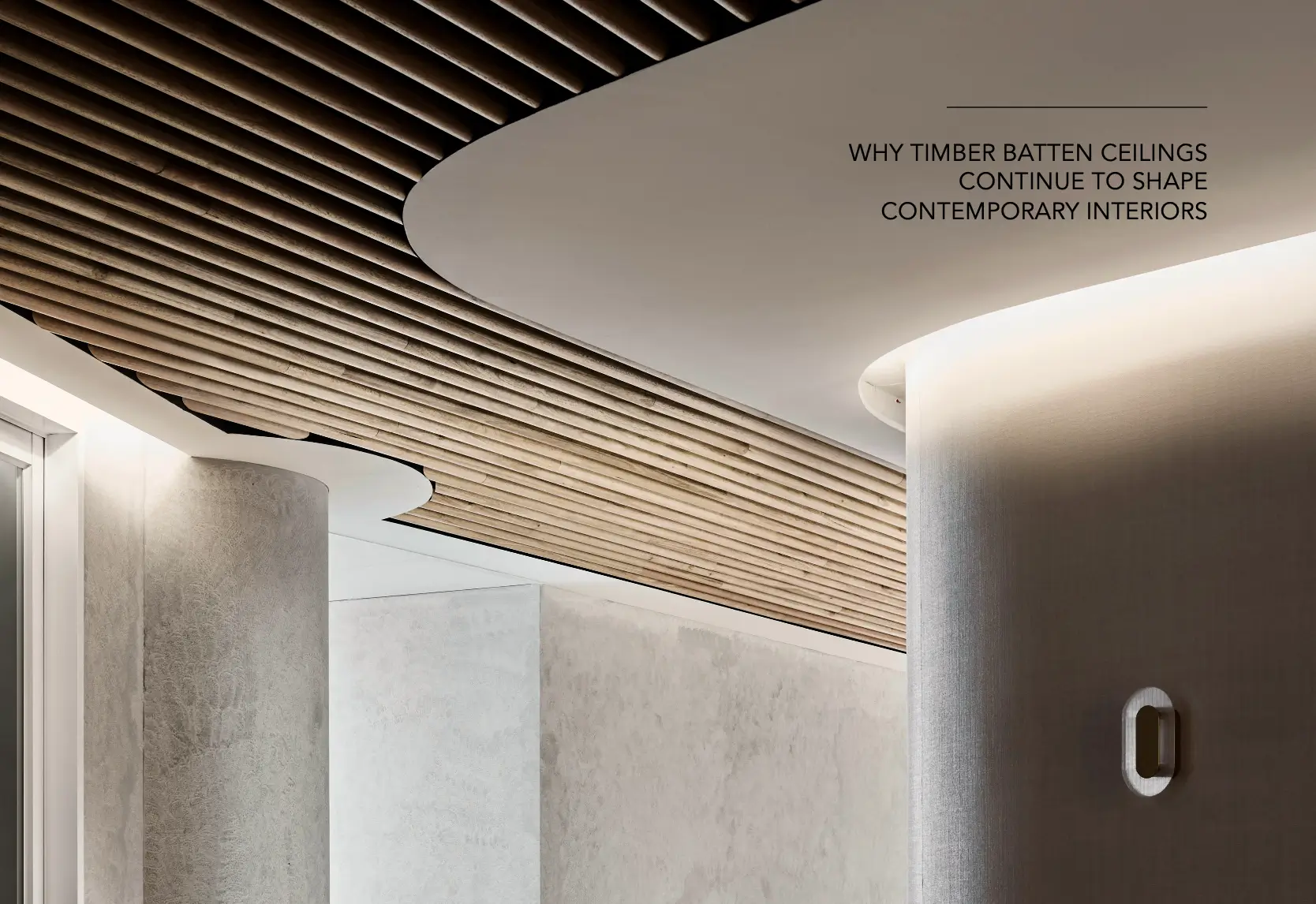
As design continues to evolve towards more human-centred environments, timber batten ceilings have emerged as one of the most effective ways to bring this material into the built form—elevating ceilings from background elements to defining features of the architecture.
Their strength lies not in ornament, but in rhythm. The linear arrangement of battens creates a subtle order overhead, guiding the eye and reinforcing spatial flow. At the same time, it introduces a connection to nature that is both immediate and enduring. This is where timber battens align closely with biophilic design principles—not as a superficial gesture, but as a material response that enhances how a space feels, sounds, and functions.
In workplaces, education settings, and public environments, this connection has measurable impact. Timber softens the visual and acoustic character of a space, reducing perceived harshness and creating a more comfortable, grounded atmosphere. It is not simply about appearance, but about experience—how occupants move through and inhabit the environment over time.
What distinguishes real timber from alternative materials is its inherent variability. No two battens are identical. Grain patterns shift, tones deepen, and subtle imperfections emerge across the surface. Rather than detracting from the design, this variation introduces richness and depth, allowing the ceiling to read as a living material rather than a static finish. It is this authenticity that continues to set timber apart, particularly in projects where a sense of quality and permanence is essential.
The psychological impact of this materiality should not be underestimated. Timber has an ability to humanise space—to bring a sense of warmth and calm to environments that might otherwise feel rigid or institutional. In high-traffic commercial settings, this becomes particularly valuable, transforming transitional or functional areas into spaces that feel considered and welcoming.
Of course, the integration of timber is not without its challenges. Fire compliance, budget constraints, and long-term performance all play a role in shaping specification decisions. However, these factors are not barriers so much as design considerations. With the right approach—selecting appropriate species, applying compliant coatings, and working with experienced suppliers—timber batten ceilings can meet stringent regulatory requirements while maintaining their architectural integrity.

Cost, too, can be navigated through careful design. Adjustments in batten size, spacing, and system configuration allow for flexibility without compromising the overall intent. It is a process of refinement—balancing visual ambition with practical realities to achieve a solution that is both buildable and enduring.
In parallel, the rise of timber-look aluminium systems has introduced an alternative pathway, particularly in projects where fire performance or scale presents limitations. While these systems offer advantages in specific contexts, they often fall short of replicating the depth, tactility, and nuance of real timber. For projects where authenticity is central to the design narrative, genuine timber remains the more resolved choice.
Sustainability further reinforces this position. When sourced responsibly, timber represents a renewable material with strong environmental credentials. Certifications such as FSC and PEFC provide assurance that the timber originates from well-managed forests, supporting biodiversity and long-term ecological balance. In this context, timber batten ceilings contribute not only to the quality of the space, but to the broader sustainability objectives of the project.
What becomes clear is that timber battens are not simply a finish—they are a system that operates across multiple layers of design. They influence acoustics, define visual rhythm, and contribute to environmental performance, all while reinforcing a connection to natural materiality.
At MBS Architectural, this layered approach is central to how we support projects. It is not about prescribing a single solution, but about understanding the intent behind the design and guiding the specification towards outcomes that are both technically sound and architecturally refined.
As expectations around performance, sustainability, and experience continue to rise, the role of materials becomes increasingly important. Timber batten ceilings offer a response that is both timeless and contemporary—grounded in natural beauty, yet adaptable to the demands of modern construction. In that balance, they continue to prove themselves not just as a design feature, but as an essential component of considered architectural interiors.

Our architectural team is here to collaborate on ideas, materiality and budget from day one. Drop us a note at hello@mbsarchitectural.com.au or call 03 9580 7800 to start the conversation.
Every material.one source.
Let's bring your project to life.





.svg)