

Exploring the Elegance and Versatility of Aluminium Batten Ceilings
Batten Design ● Aluminium Ceilings
February 25, 2026
Aluminium batten ceilings have become one of the defining elements of contemporary architectural design, balancing visual refinement with genuine performance. More than a decorative feature, they shape the way a space feels, sounds and functions — introducing rhythm, depth and texture while seamlessly integrating lighting, acoustics and building services. This article explores why architects and designers continue to turn to aluminium battens across commercial, hospitality and residential projects, unpacking their versatility, durability and ability to adapt across vastly different design languages. From acoustic performance and airflow to modular installation efficiencies and finish flexibility, it highlights how aluminium battens have evolved into a complete architectural system — one capable of delivering both technical performance and lasting aesthetic impact.
PROJECTS LOOKBOOK ⇩
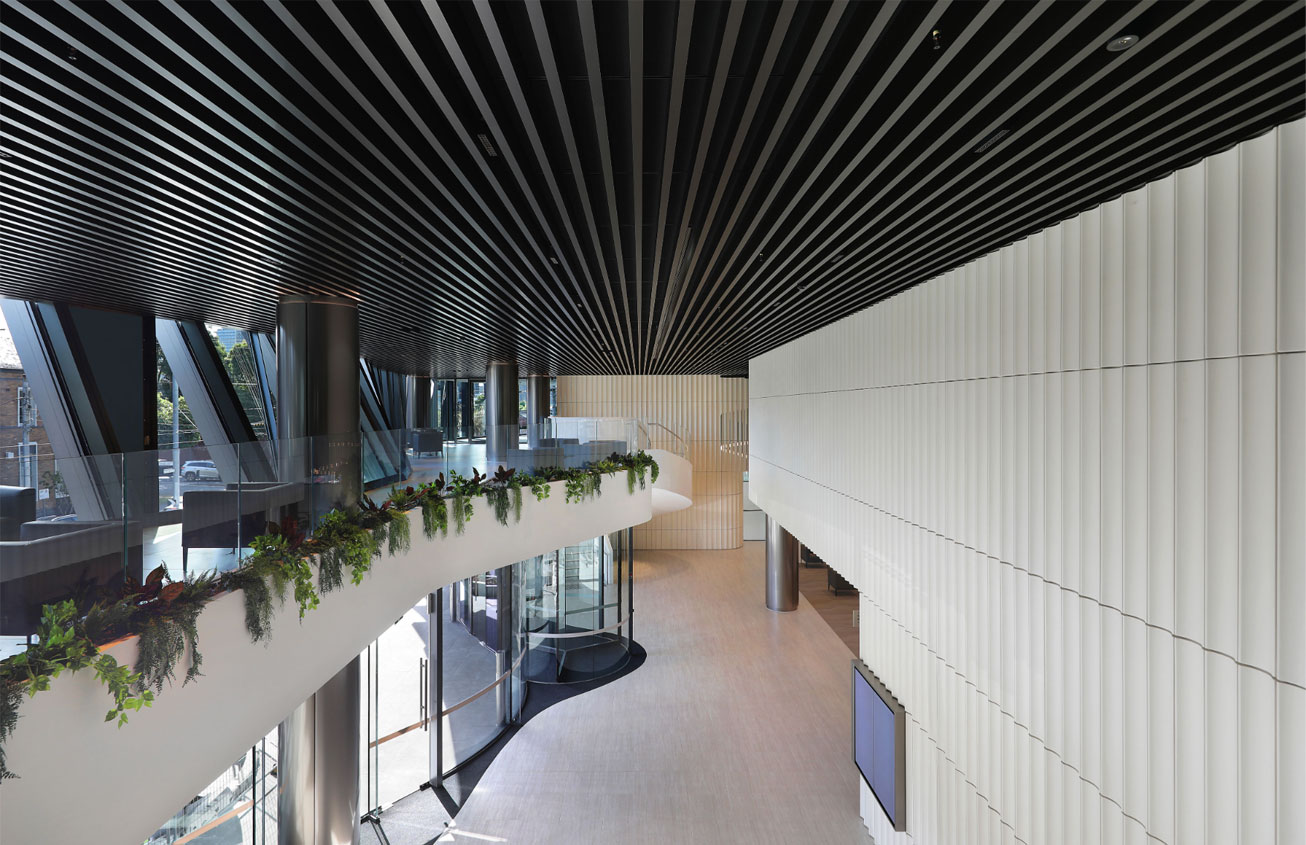
Aluminium Batten Ceilings: Where Form Meets Function
Some materials quietly support a design. Others define it.
Aluminium battens belong firmly in the latter category. Over the last decade, they have become one of the most recognisable and versatile elements within contemporary architecture — shaping everything from corporate workplaces and hospitality venues through to education precincts, transport hubs and residential interiors. Their appeal lies not in excess, but in precision. Linear forms, carefully resolved spacing, and the ability to balance openness with concealment have made aluminium battens a favourite amongst architects seeking ceilings that feel both expressive and restrained.
At MBS Architectural, aluminium battens have long been central to the way we approach ceiling design. Not simply as decorative features, but as systems that influence acoustics, lighting integration, airflow, constructability and the overall experience of a space.
Because when done well, a ceiling is never just overhead.
⎯⎯⎯⎯
The Architectural Appeal of Aluminium Battens
There is an inherent clarity to aluminium battens that makes them incredibly adaptable. The repetition of profile and shadow creates rhythm. The spacing between each batten introduces depth and movement. Together, they transform otherwise flat ceiling planes into something far more layered and architectural.
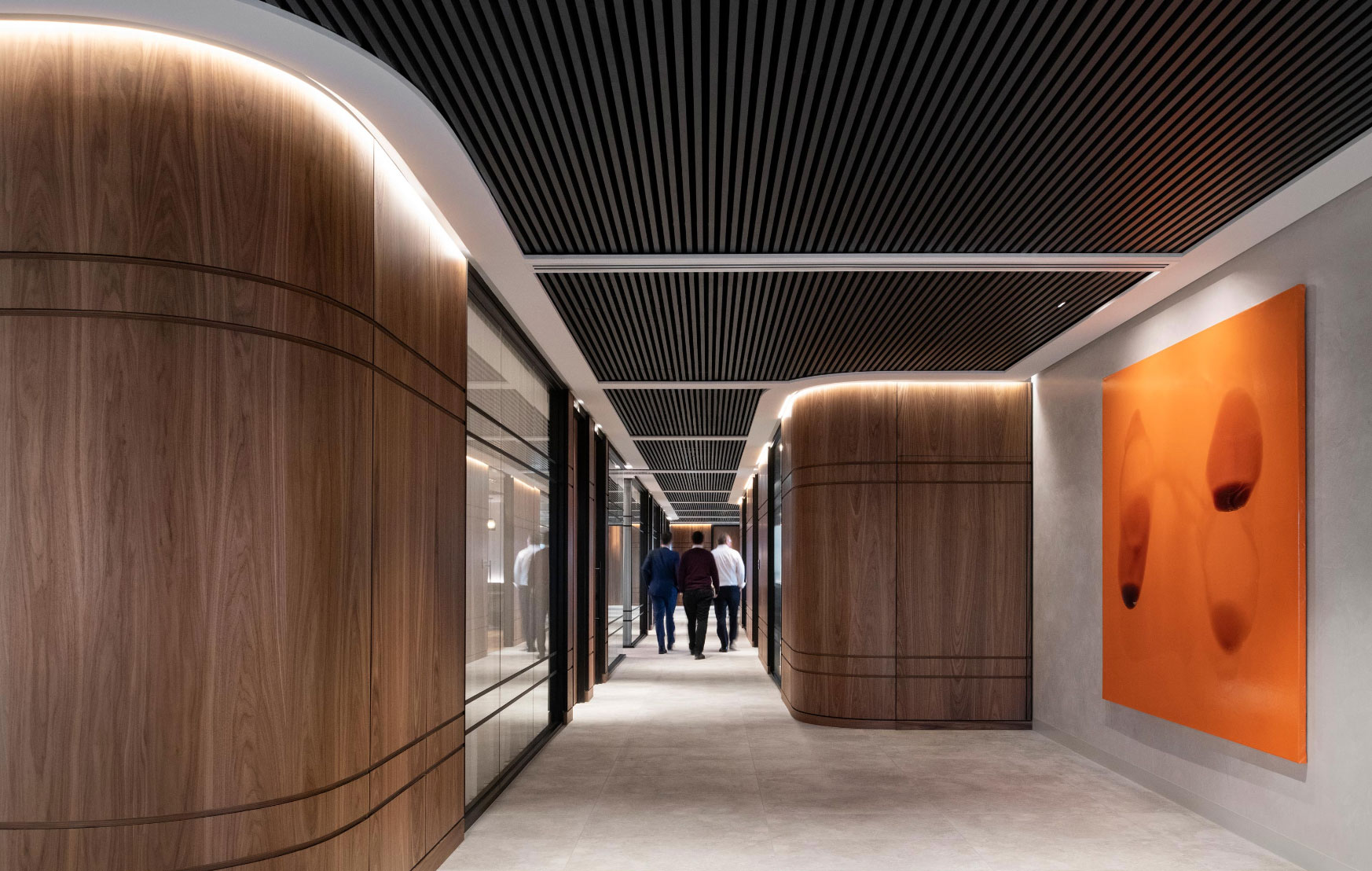
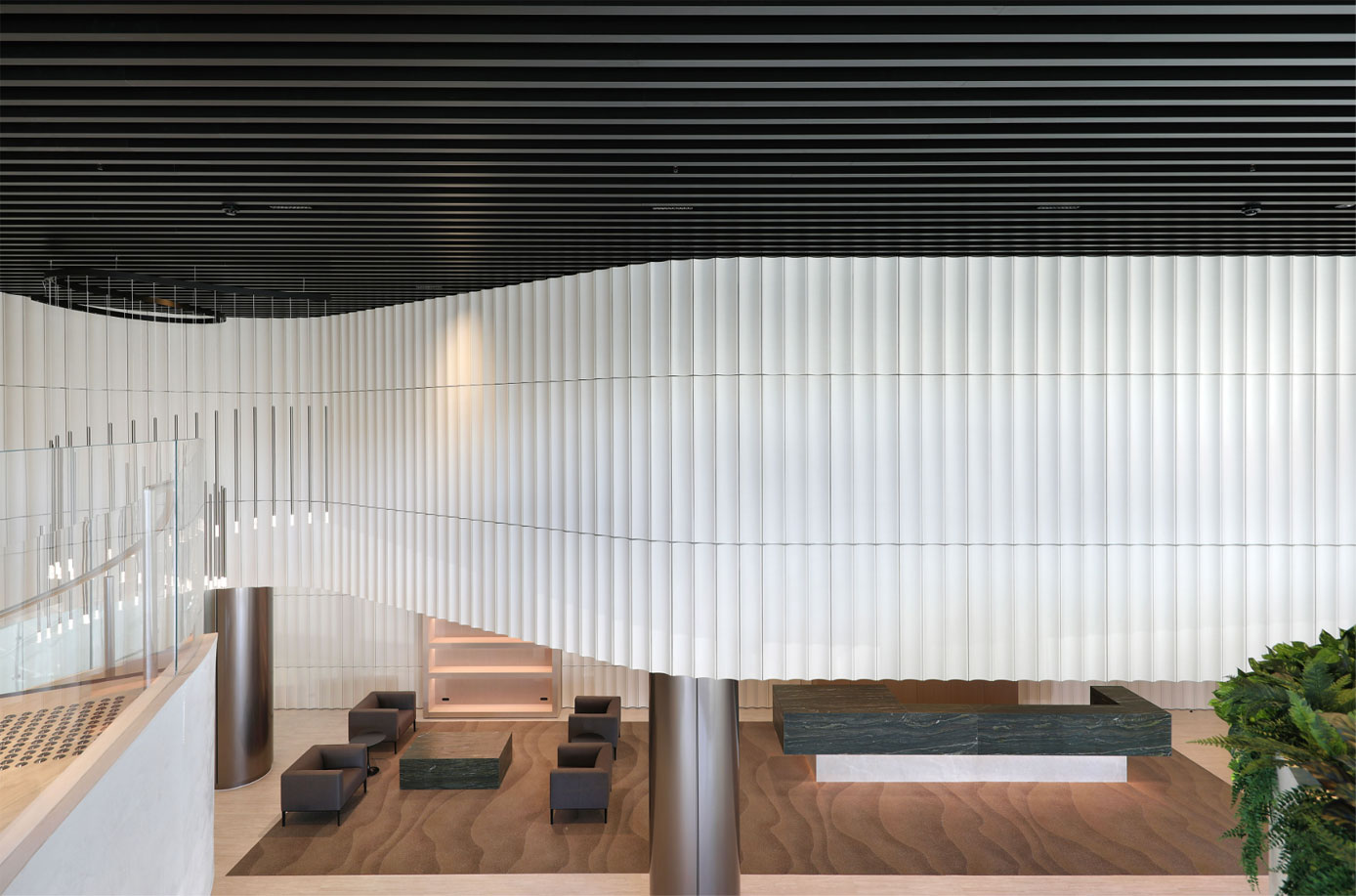
This is particularly evident in large commercial environments, where battens are often used to soften scale and guide movement through a space. A tightly spaced batten ceiling can create intimacy and focus, while wider centres allow the ceiling to feel lighter and more open. The visual effect shifts again depending on viewing angle, lighting conditions and finish selection, giving the ceiling an almost dynamic quality as people move beneath it.
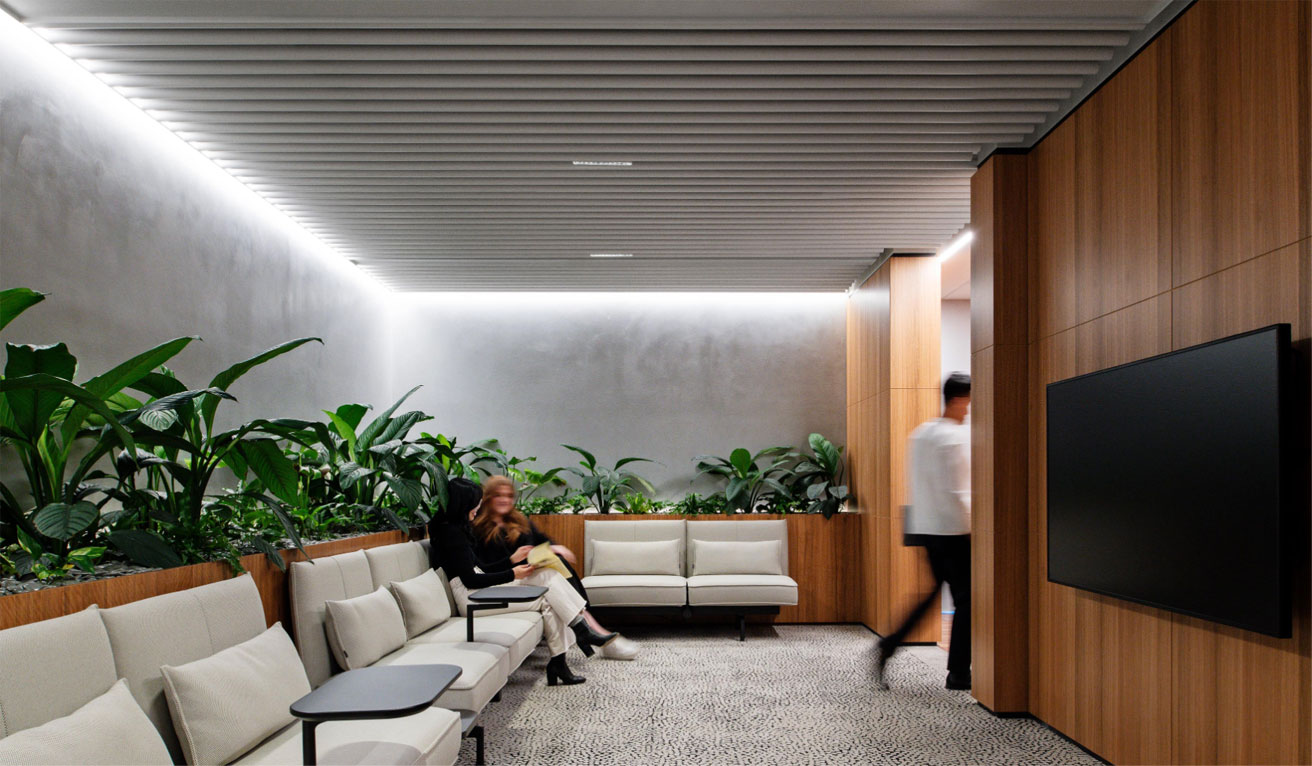
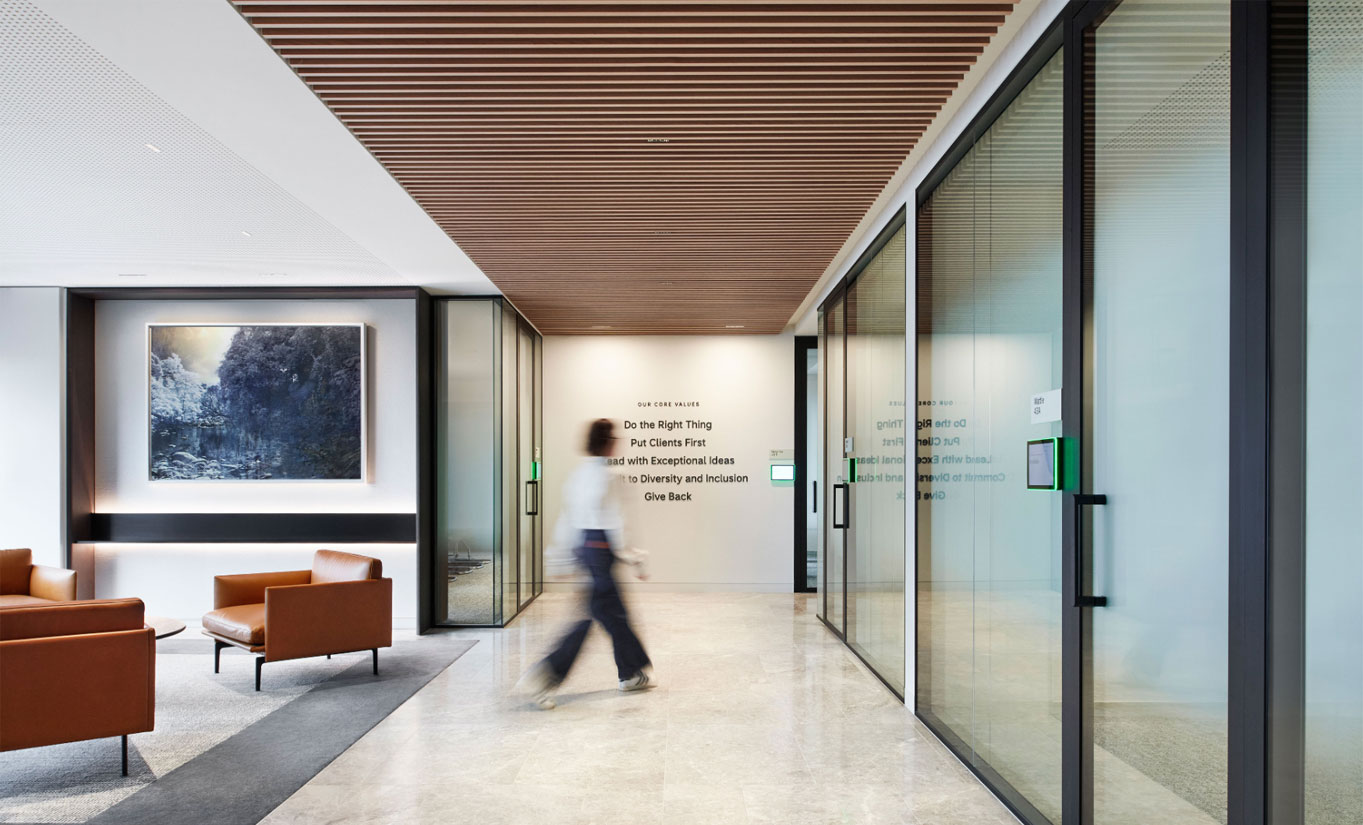
What makes aluminium battens especially compelling is their ability to sit comfortably across vastly different architectural languages. In one project, they might appear crisp and minimal in matte white, disappearing into a clean corporate interior. In another, deep bronze or black battens create drama and contrast against stone and timber finishes. Timber-look aluminium battens introduce warmth and tactility without the maintenance and fire concerns associated with natural timber.
The system itself remains fundamentally the same. The atmosphere it creates can be entirely different.
⎯⎯⎯⎯
Designed for Flexibility
One of the defining strengths of aluminium batten systems is their ability to adapt.
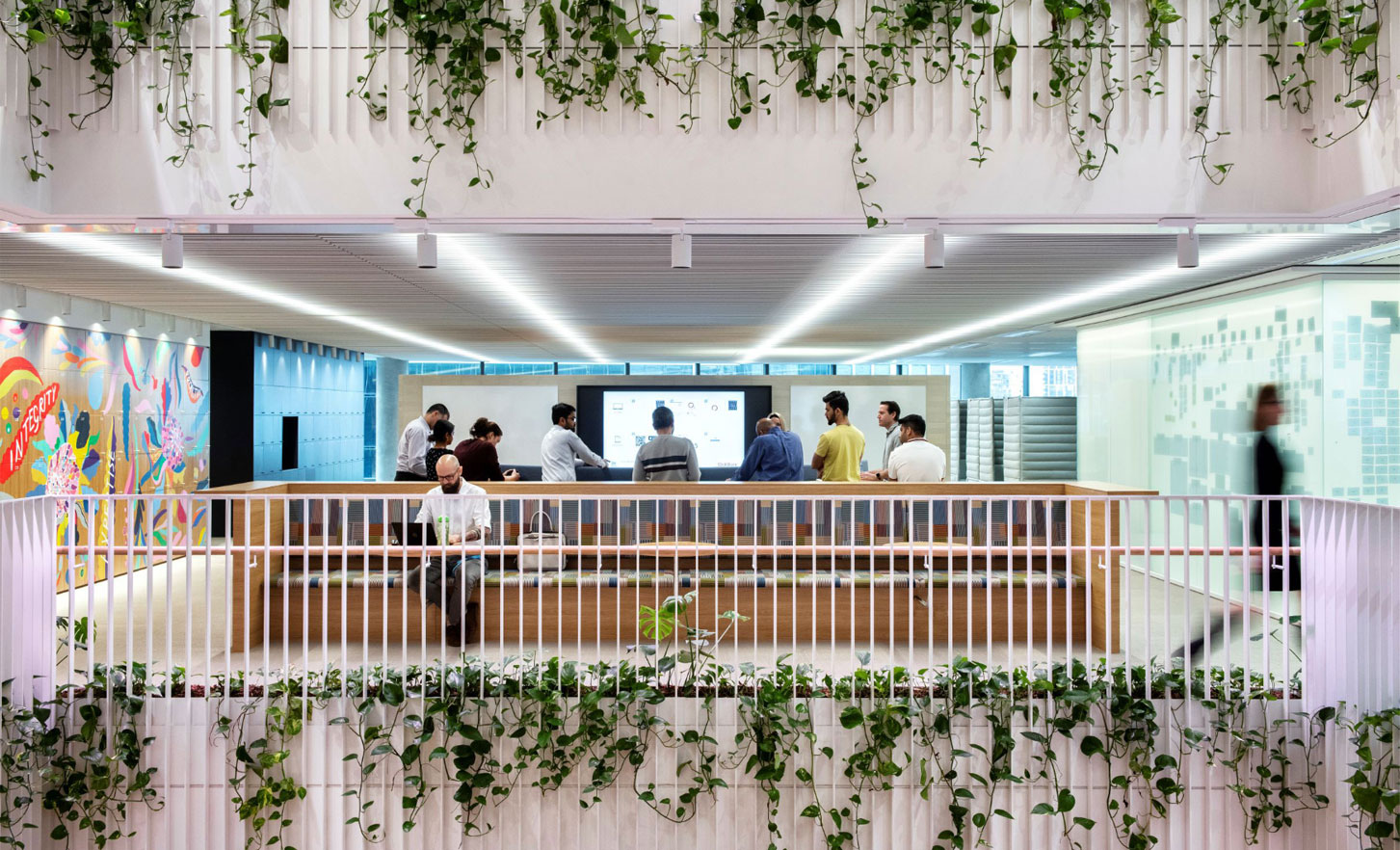
Profile sizes can vary dramatically — from slim tubular battens through to deep architectural blades designed to create bold directional forms. Spacing can be tightened or opened depending on the desired visual density, service integration requirements or acoustic strategy. Finishes range from powder coated and anodised surfaces to highly realistic timber-look coatings that replicate the warmth of natural timber while retaining the performance benefits of aluminium.
This flexibility allows designers to use battens as both a subtle backdrop and a defining architectural gesture.
Increasingly, battens are also being used to shape the way occupants experience a space. Cranked or angled batten systems can obscure direct views into the ceiling plenum while still maintaining openness and airflow. Integrated lighting can sit discreetly between battens, allowing the ceiling to read as uninterrupted and refined. In many projects, battens are no longer simply “ceiling finishes” — they are spatial devices that control rhythm, movement, light and perception.
⎯⎯⎯⎯
Performance Beyond Aesthetics
For all their visual appeal, aluminium battens are equally valued for what they do technically.
The gaps between battens create opportunities for acoustic treatment and environmental performance that traditional closed ceilings often struggle to achieve. When paired with acoustic backing or insulation within the plenum, batten ceilings can deliver significant sound absorption while maintaining an open architectural expression.
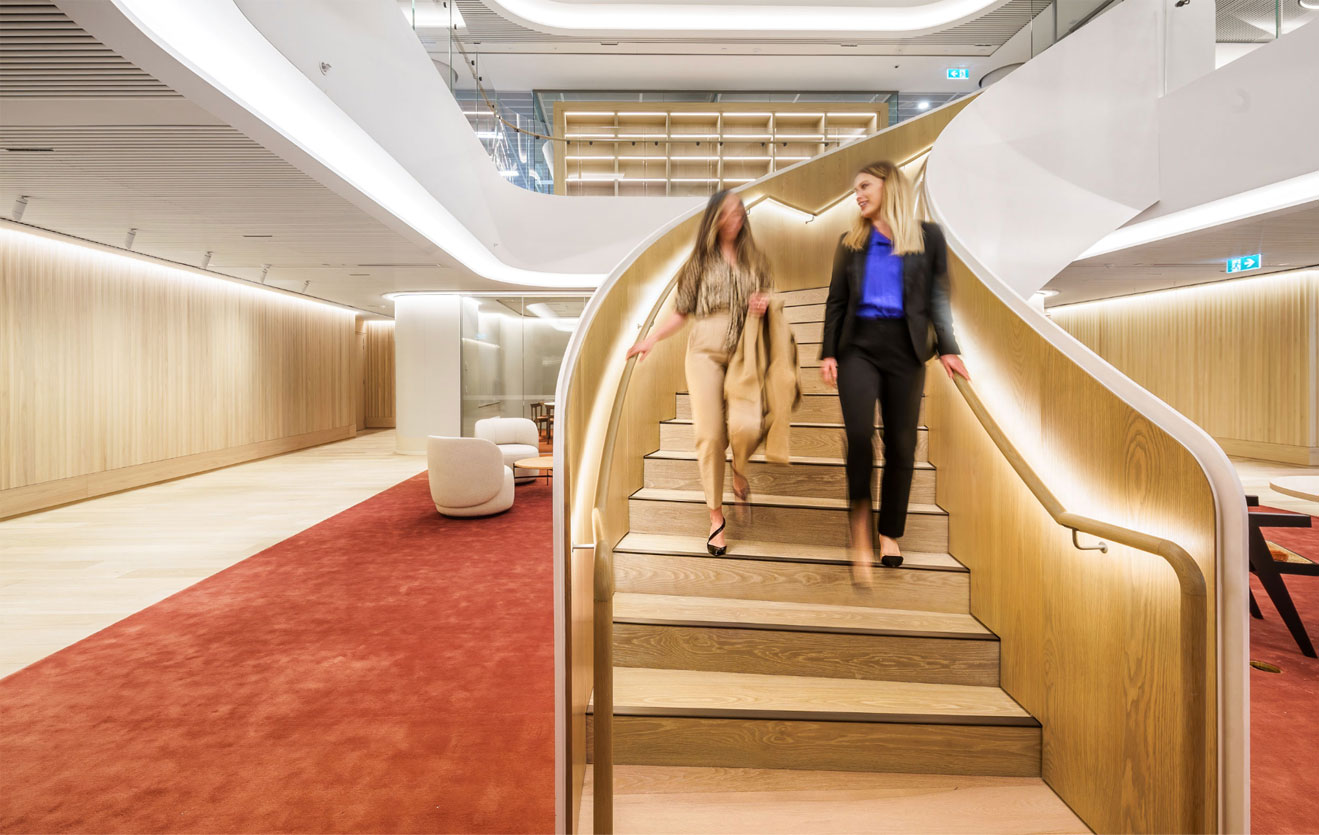
This becomes particularly important in workplaces, hospitality venues, education environments and public spaces where reverberation control directly impacts comfort and usability.
⦿ Acoustic blankets positioned behind battens help absorb sound and reduce reverberation
⦿ Open batten systems allow airflow and return air movement through the ceiling plane
⦿ Integrated services can be concealed within the linear arrangement of battens
⦿ Lighting, sprinklers and HVAC elements can be coordinated seamlessly into the ceiling design
The result is a ceiling system that performs on multiple levels simultaneously — visually, acoustically and functionally.
⎯⎯⎯⎯
Durability and Longevity
Aluminium’s inherent durability is another reason it has become such a dominant architectural material.
Unlike many traditional ceiling materials, aluminium is resistant to moisture, corrosion and warping, making it suitable across both internal and external applications. Coastal environments, transport infrastructure, hospitality venues and high-traffic commercial spaces all benefit from aluminium’s resilience and low maintenance requirements.
This longevity also contributes to sustainability outcomes. A well-designed aluminium batten ceiling can maintain its appearance and performance for decades, reducing replacement cycles and ongoing maintenance demands.
For projects where fire compliance is critical, aluminium also offers significant advantages. As a non-combustible material, aluminium battens can achieve Group 1 fire classifications without requiring additional coatings or treatments — an increasingly important consideration within modern commercial and public architecture.
⎯⎯⎯⎯
Simplifying Installation Through Modular Design
While the finished result often appears highly bespoke, the success of modern aluminium batten systems frequently lies in the efficiency of what happens behind the scenes.
At MBS Architectural, our Apollo batten systems are designed around a modular installation methodology that significantly simplifies on-site coordination. Pre-indexed clips positioned along mounting rails ensure battens are installed at precise centres, removing the need for complex set-out calculations during installation.
This approach delivers several key benefits:
⦿ Faster installation time on site
⦿ Greater accuracy and alignment consistency
⦿ Reduced labour costs
⦿ Easier coordination with lighting and building services
⦿ Improved overall finish quality
For large-scale commercial projects, where programme pressures and coordination demands are high, these efficiencies become invaluable.
A ceiling may appear effortless once completed. Achieving that simplicity requires systems designed with buildability in mind from the very beginning.
⎯⎯⎯⎯
A Material That Continues to Evolve
Perhaps the most compelling aspect of aluminium battens is that they continue to evolve alongside architecture itself.
As designers push toward more integrated, flexible and experiential spaces, batten systems have adapted to support increasingly ambitious ideas. Curved battens, cranked profiles, concealed access panels, integrated acoustic systems and custom finishes are now commonplace. What was once a relatively simple linear ceiling system has become a highly refined architectural toolkit.
And yet, despite this evolution, the fundamental appeal remains unchanged.
Clean lines. Depth. Rhythm. Precision.
A ceiling system capable of quietly transforming the entire character of a space.
Aluminium batten ceilings represent far more than a passing architectural trend. They embody a way of designing that values both performance and atmosphere — where technical requirements are seamlessly woven into the architectural expression of a space.
At MBS Architectural, we continue to see aluminium battens used in increasingly inventive ways across commercial, hospitality, education and public projects. Whether the goal is warmth, drama, subtlety or acoustic performance, battens offer a level of flexibility few ceiling systems can match.
Because the best ceilings are never simply looked at.
They shape how a space is experienced.

Our architectural team is here to collaborate on ideas, materiality and budget from day one. Drop us a note at hello@mbsarchitectural.com.au or call 03 9580 7800 to start the conversation.
Every material.one source.
Let's bring your project to life.





.svg)